From Intent to Action: Designing a Recycling Platform

Role: Founding product designer and acting product manager — led user research, competitive analysis, MVP scoping, prototyping, and iterative usability testing to de-risk product decisions before development
Tools: Adobe XD, Photoshop, TestFlight beta deployment, user interviews, contextual inquiry, competitive field research
Duration: 18 months
The Core Tension
Most people who want to recycle don’t. Not because they don’t care — but because the system actively works against them. Rules change by zip code, instructions contradict each other, and even when people do everything right, they have no way of knowing if it made a difference.
CarbonLoop was built to close that gap — not by lecturing people about sustainability, but by making the actual process of recycling easier, clearer, and more rewarding than the existing alternatives.
Market Opportunity
CarbonLoop operates at the intersection of green tech, logistics, and civic engagement — a space dominated by inflexible municipal systems that haven’t meaningfully evolved in decades.
Our differentiated value proposition rested on three pillars no competitor was delivering together:
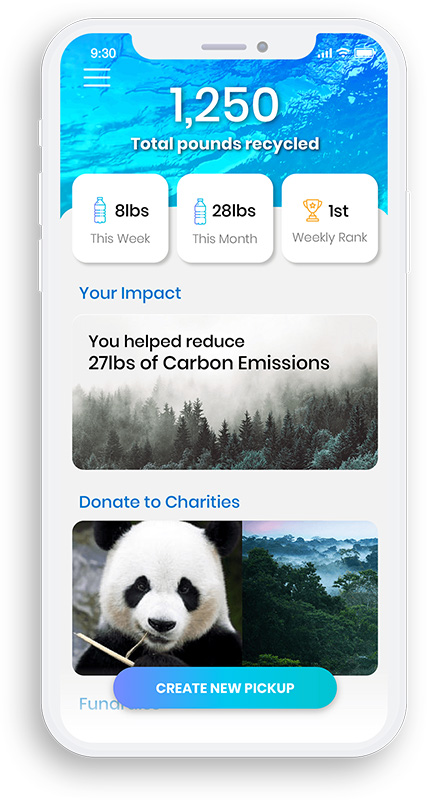
Guided Recycling — real-time, localized guidance on what’s actually recyclable (not what the bin label says), reducing contamination and building user confidence.
On-Demand Pickup — flexible scheduling for users in areas with limited drop-off access, modeled on familiar consumer logistics patterns.
Impact Transparency — individual and collective impact metrics that reinforce behavior by making invisible efforts visible.
Discovery: What We Assumed vs. What We Found
Initial assumption: Our target user was the eco-conscious early adopter — already motivated, already trying to recycle, just lacking a better tool.
What research told us: The biggest barrier wasn’t motivation — it was systemic confusion and inconsistency. Once we understood that, the product direction shifted fundamentally. We weren’t building a tool for people who already recycled well. We were building an education and logistics layer for everyone the existing system had failed.
That pivot shaped every subsequent product decision.
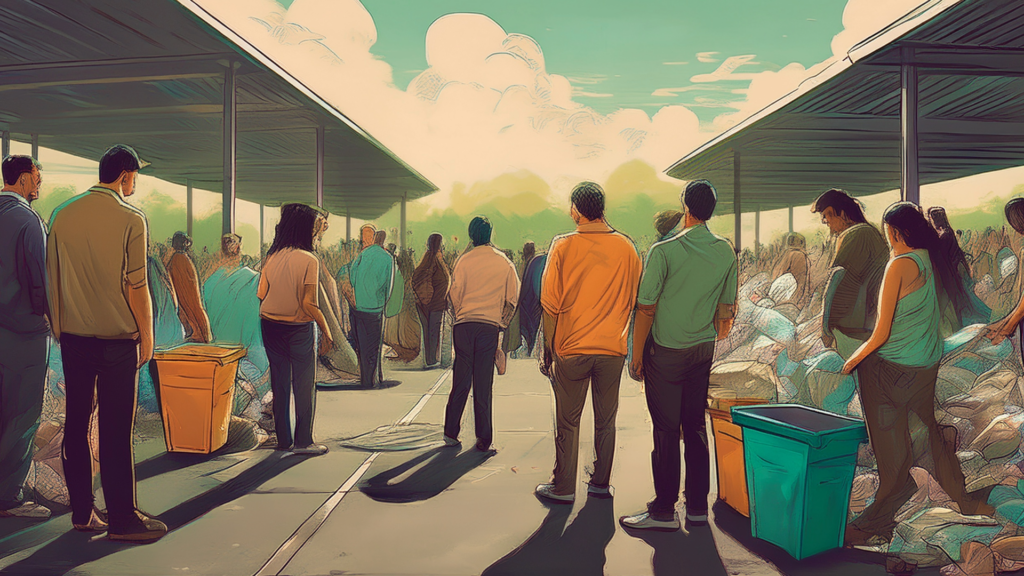
Research & Discovery
Methods: 30 user interviews (on- and off-site), contextual inquiry at homes and recycling centers, competitive field observation, journey mapping
What we wanted to learn:
- What emotional relationship they had with recycling as a behavior
- How people actually recycled at home — habits, confidence, frustrations
- What drove someone to make the trip to a drop-off center vs. not
- How people described their experience with existing systems
Going into the field
To build genuine competitive intelligence, we didn’t just research recycling centers — we visited them. We brought our own recyclables, waited in line with other patrons, and observed the full experience firsthand. This gave us a level of behavioral insight that desk research couldn’t.
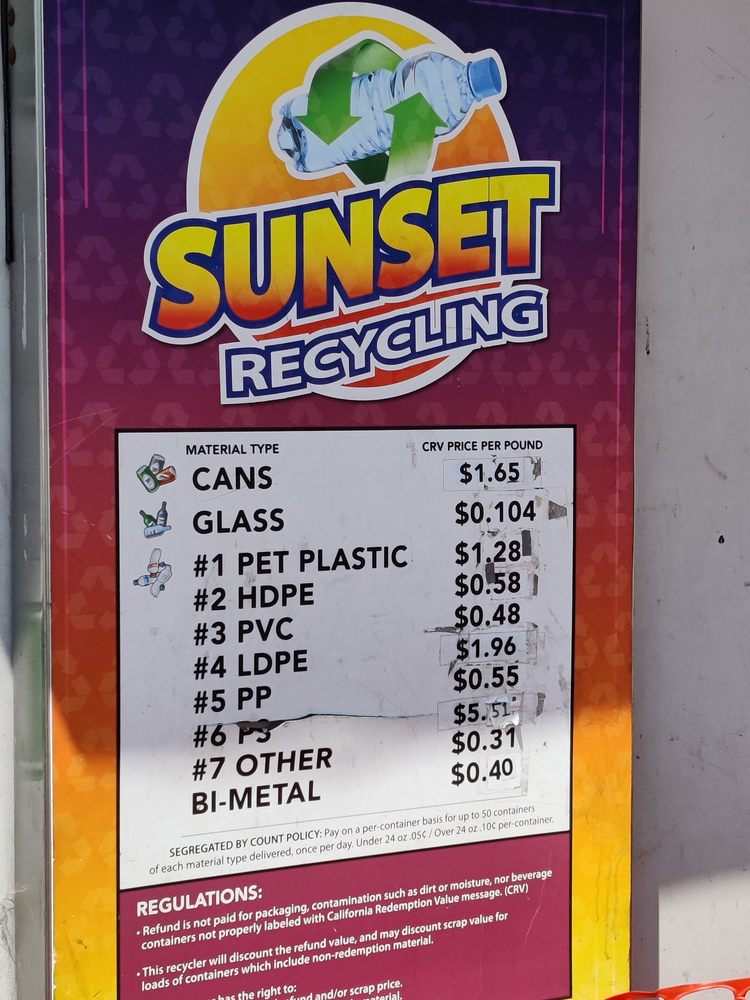
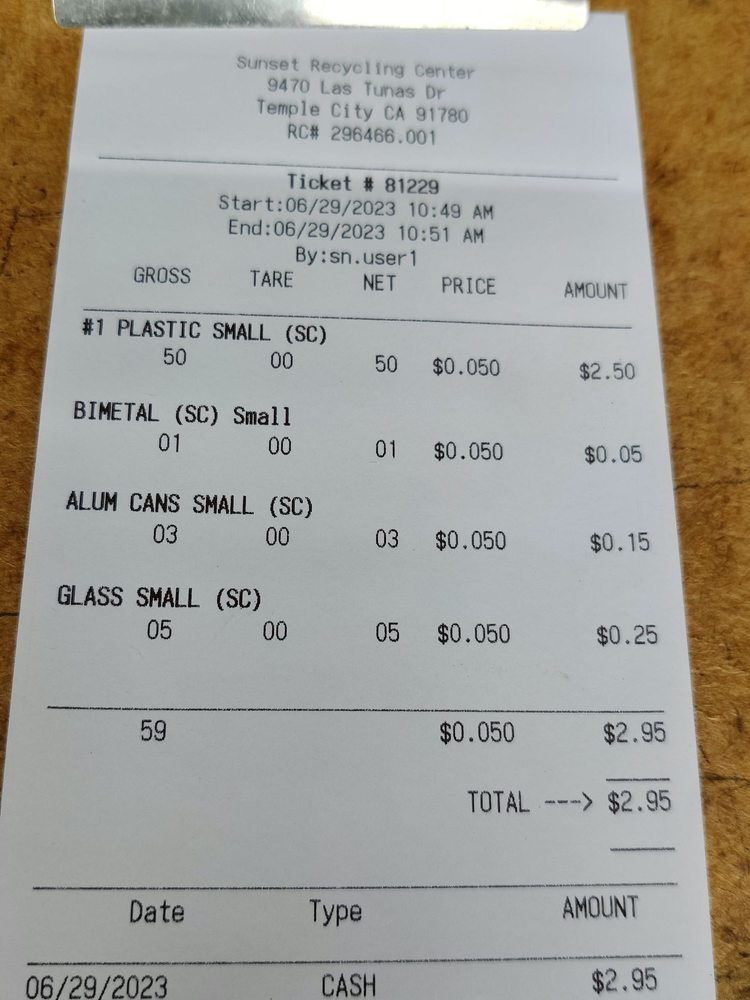
What we saw: most people arrived with bags of plastic PET bottles and aluminum cans. Glass — despite having the highest CRV return value — was rarely brought in because transportation risk and potential injury made it not worth the effort. The economics of effort vs. reward were shaping behavior in ways the system wasn’t designed around.
We also collected basic quantitative data: volume of materials processed during peak hours, average time per visit, and the actual cash value of a typical recycling trip. For most users, the time investment wasn’t proportional to the return.
What users were asking at the drop-off line:
- “Where does it actually go?”
- “What happens from here?”
- “How has my contribution actually affected anything?”
These weren’t edge-case questions. They were universal — and they pointed to a trust and transparency gap at the core of the recycling experience.
We collected some quantitative data, such as:
Amount/type of product moving – how much recyclables were being moved throughout peak hours.
Time spent at visit – how much of a time commitment recycling was.
Exchange rate – how much was their efforts worth in monetary exchange.
We asked a few select patrons about their understanding of the process of recycling as they waited in line. Though, most had a good concept of recycling and spoke generally about the benefits it had toward the planet, some had more questions than answers.
Some of them asked:
- “Where does it actually go?”
- “What happens from here?”
- “How has my contribution affected the world around me?”
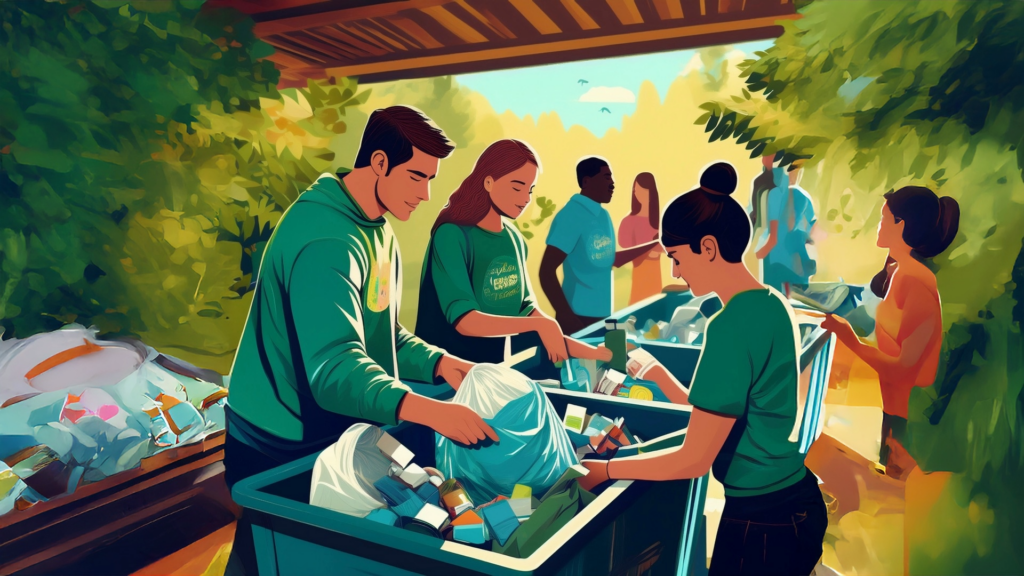
Synthesis: The Journey That Was Failing Users
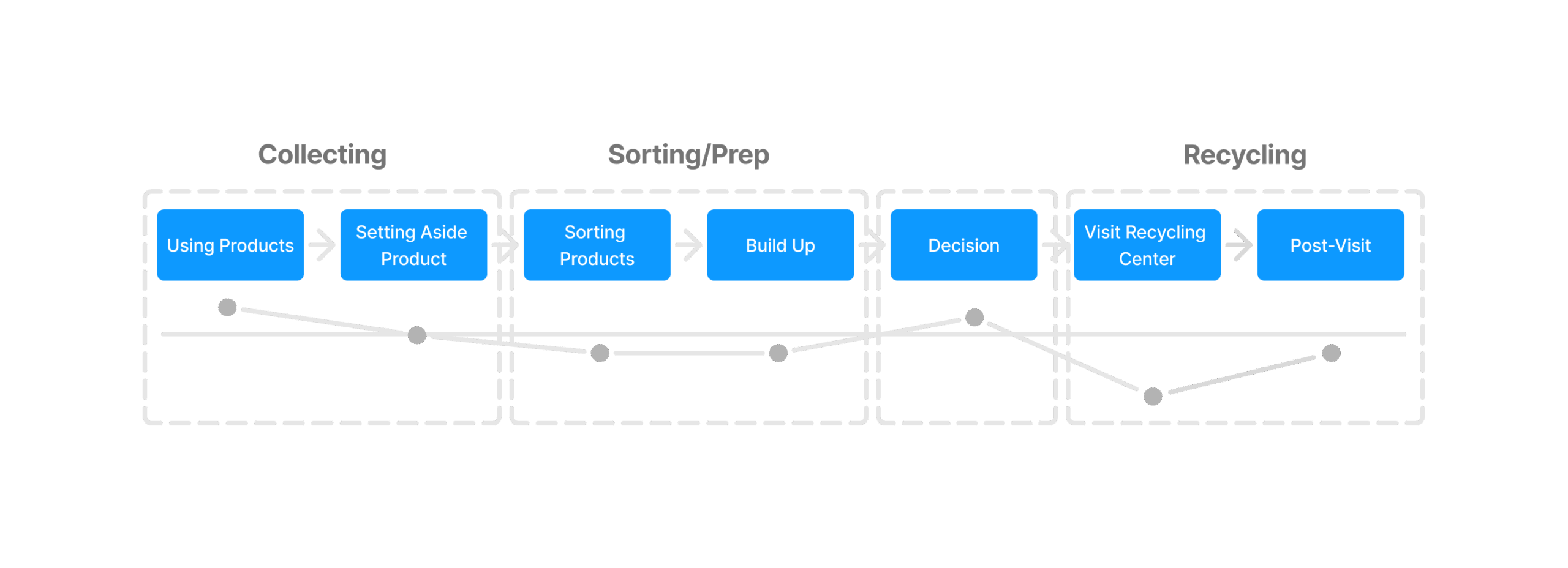
Mapping the end-to-end recycling journey revealed where motivation collapsed into inaction:
Using a product → mostly fine, mild confusion about recyclability Setting it aside → intent present, but no system to support follow-through Sorting at home → confusion, inconsistent rules, no reliable guidance Storage accumulating → guilt, procrastination, the “I’ll go when I have enough” trap Decision to recycle → dread dressed as optimism The trip itself → time-consuming, unpleasant, often understaffed Post-visit → mild relief, lingering doubt about whether it even counted
The emotional arc of recycling — for most users — ended in uncertainty. That’s a product problem, not a values problem.
Who We Were Designing For

Primary: Jordan, 28 — The Uninformed Urban apartment dweller. Cares about the environment conceptually but doesn’t connect personal actions to measurable outcomes. Doesn’t know what’s actually recyclable, saves bottles and cans until “there’s enough to make the trip worth it,” and the CRV cash value is often the primary motivation for making the trip at all.
“Can pizza boxes be recycled? I’ve heard yes and no. If I mess it up, what’s the point? Sometimes I just throw it all in the trash because it feels like a hassle.”
Jordan’s behavior was the most common pattern in our research — high intent, low follow-through, driven out by friction and confusion.
Secondary Users: The Already Active

Secondary: Maya, 34 — The Already Active Suburban homeowner with curbside access. Sorts meticulously, composts, participates in textile recycling. Her problem isn’t access — it’s isolation. She’s doing everything right but has no sense of collective impact or community.
“I’d love to find ways to connect with others in my area who care about this stuff too.”
Maya represented the ceiling of what the current system produced — and still left engagement on the table.

Competitive Positioning
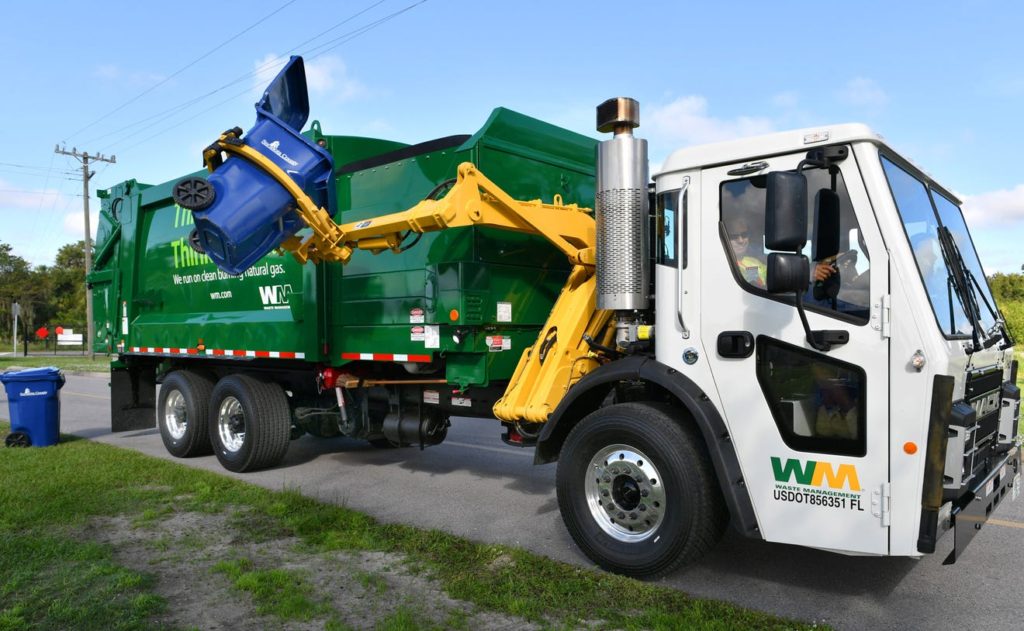
The dominant competitor wasn’t another app. It was municipal curbside service — something most homeowners already paid for as part of the cost of living, making it the path of least resistance regardless of quality.
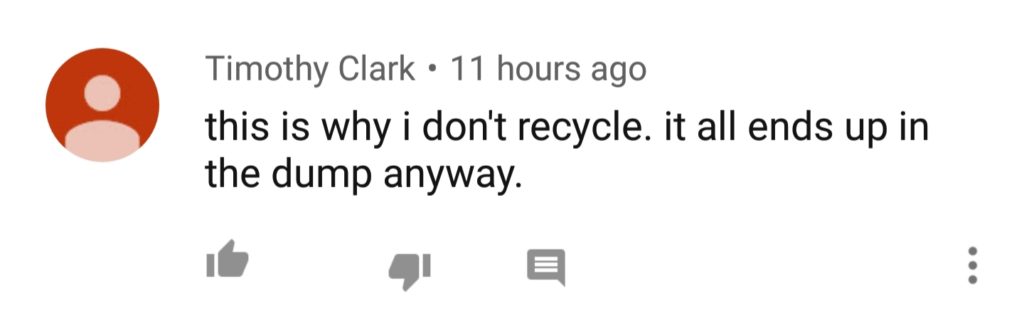
The problem: because contamination standards are loosely enforced, a significant portion of what goes into blue bins ends up processed as garbage anyway. Users had no visibility into this. They thought they were recycling; the system was quietly failing them.
Our competitive advantage wasn’t price or convenience alone — it was transparency and education. We could tell users what their recyclables actually were, where they were going, and what impact their efforts had produced. That feedback loop didn’t exist anywhere in the current system.
MVP Scoping
We scoped the MVP around three testable flows, deployed on TestFlight for beta testing:
Onboarding — introduce the product’s value proposition and establish the habit framing upfront. The message: recycling with CarbonLoop is easy and rewarding.
Signup — minimize friction to first interaction. We intentionally allowed users to browse core features before completing full account setup, reducing early drop-off.
Scheduling — the core transaction. We modeled the pickup flow on familiar consumer logistics patterns (DoorDash, Uber Eats) — a menu-based item selection and a checkout confirmation flow — because our research showed users navigated these patterns with near-zero learning curve.
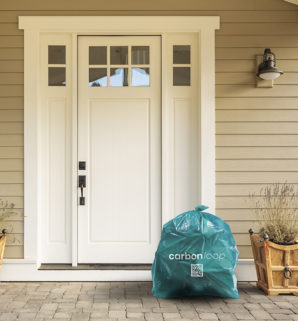
Supporting logistics: custom-branded pickup bags with QR codes tied to user accounts, enabling item-level tracking from doorstep through processing.
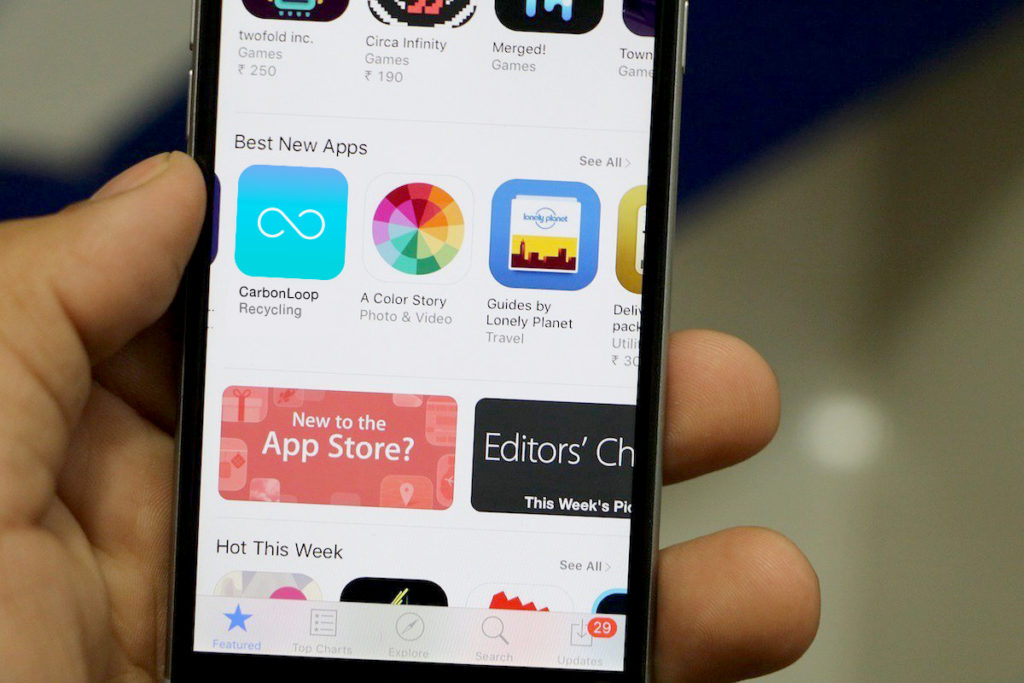
Key Design Decisions
Lowering the signup wall Users could access content and browse features before completing account creation. This was a deliberate adherence decision: getting users into the product experience before asking for commitment reduced early funnel drop-off.
Modeling scheduling on delivery apps The mental model our users already had for “someone comes to my house to pick something up” was food delivery. We leaned into that — same flow structure, same confirmation pattern — to reduce the learning curve for the core transaction.
Designing for impact visibility Impact metrics weren’t just an engagement feature. They were the product’s answer to the fundamental trust question users kept asking: “Did this actually matter?” Showing individual contributions as part of a collective total gave users the feedback loop the existing system never provided.
Onboarding
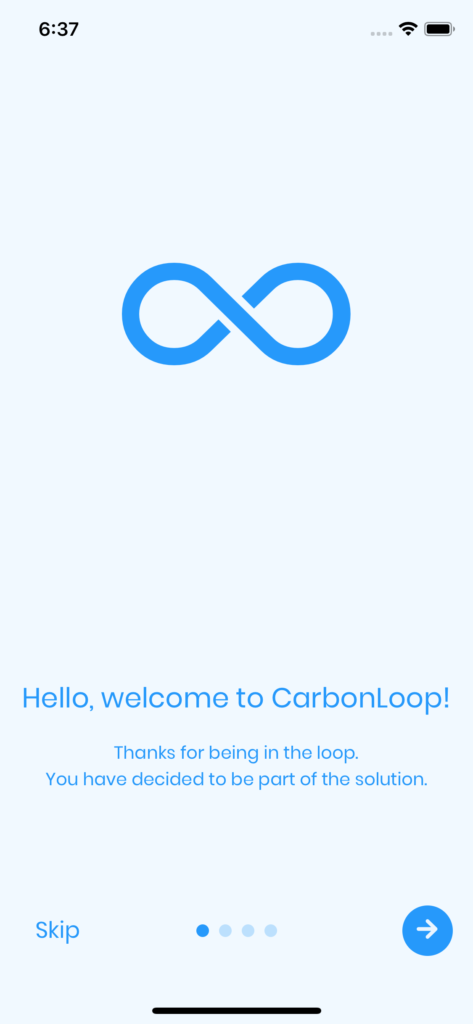
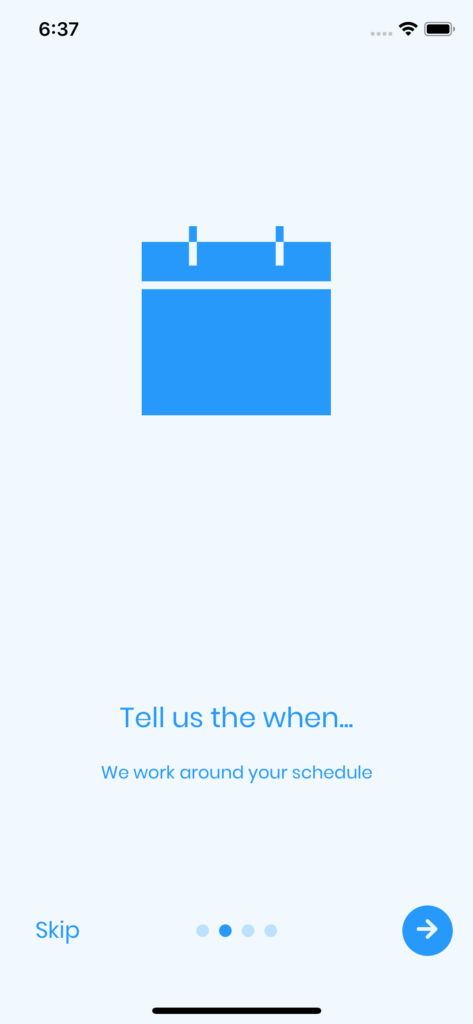
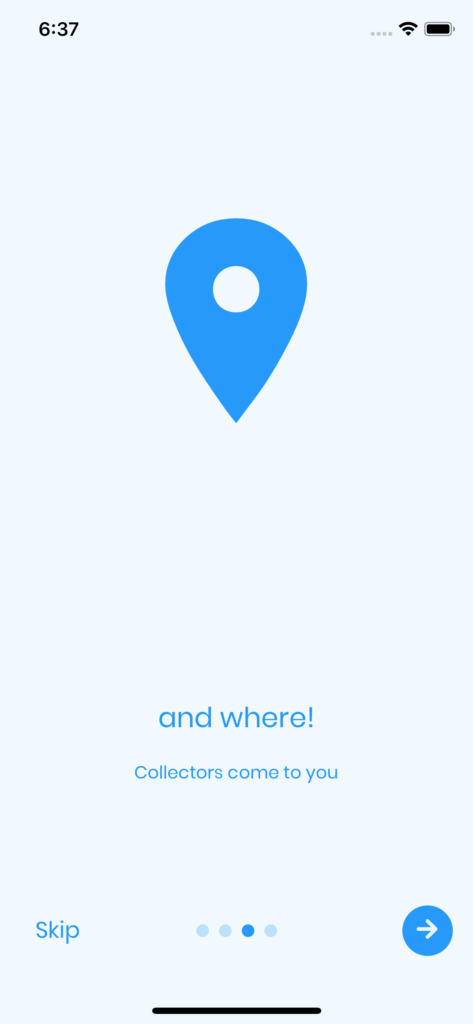
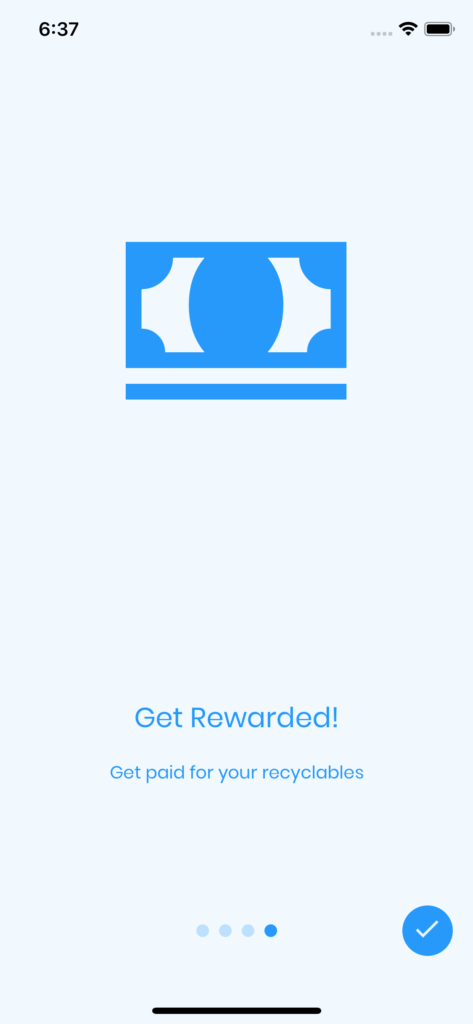
We wanted to introduce users to the app and show how they’d benefit from using it. Our onboarding concept was designed to motivate them to reduce their carbon footprint and contribute to environmental conservation efforts and develop a habit.
The message we wanted to get across to them is that it’s easy and rewarding.
Signing Up
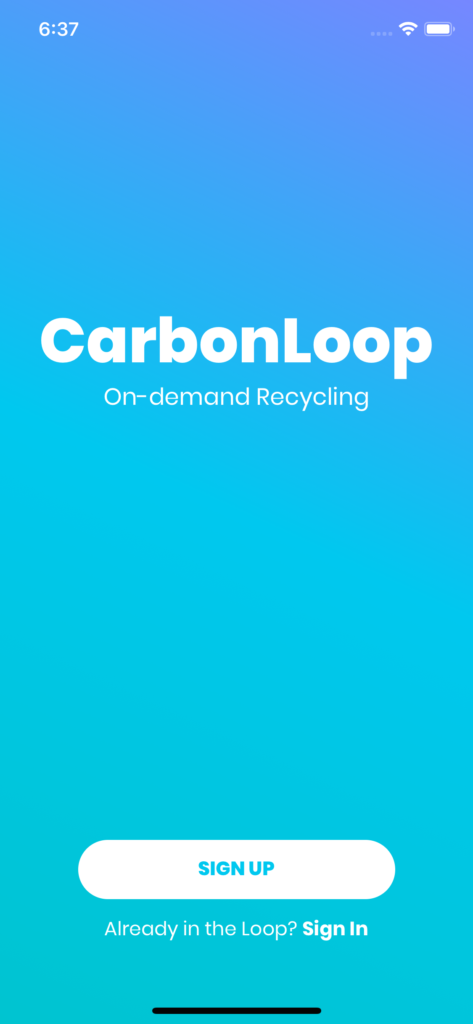
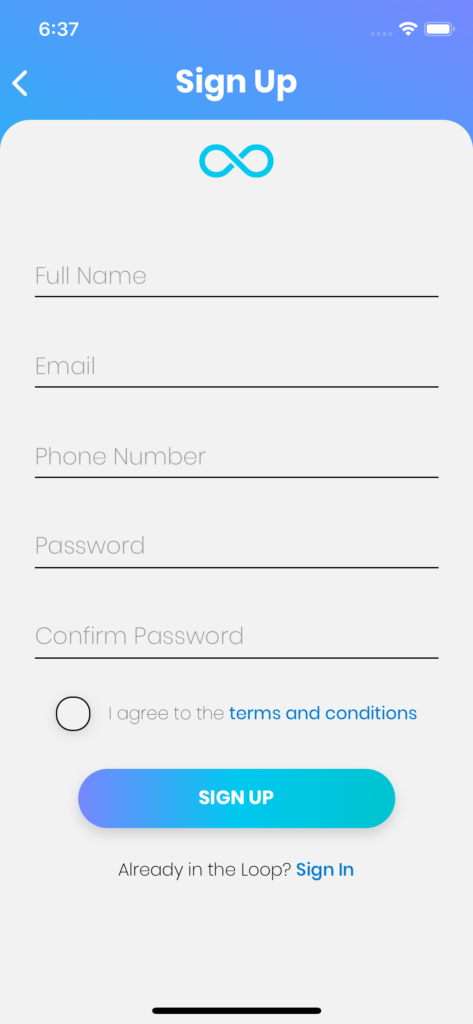
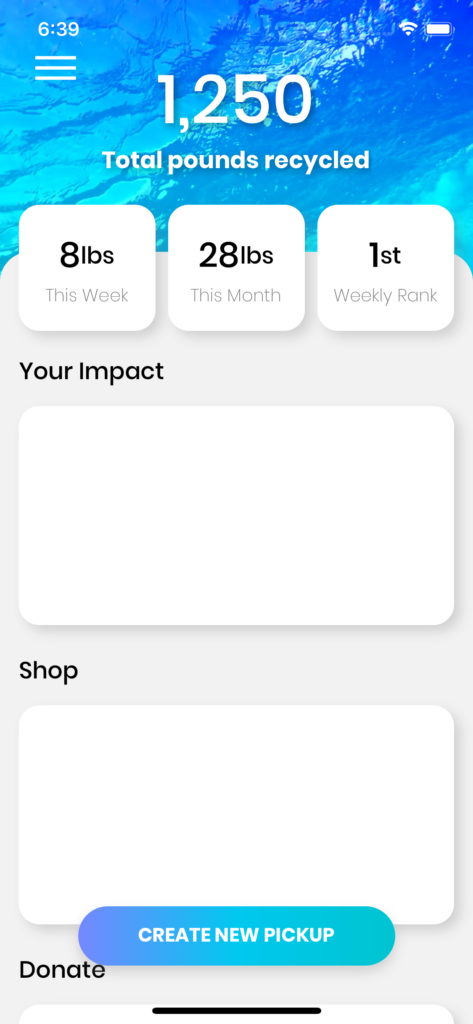
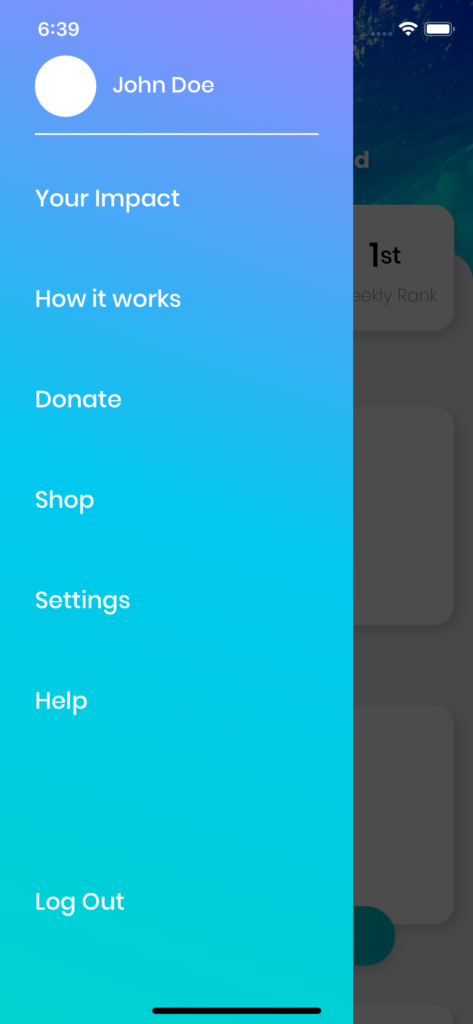
After users go through the introduction, they’ll be prompted to set up their account. We wanted to make the app quick to access and browse before giving them more instruction to minimize drop-off. Users would be able to access information with minimal friction. This effort was to improve adherence, allowing them to be able to still tour the app and access other features such as news articles.
Scheduling Pickups
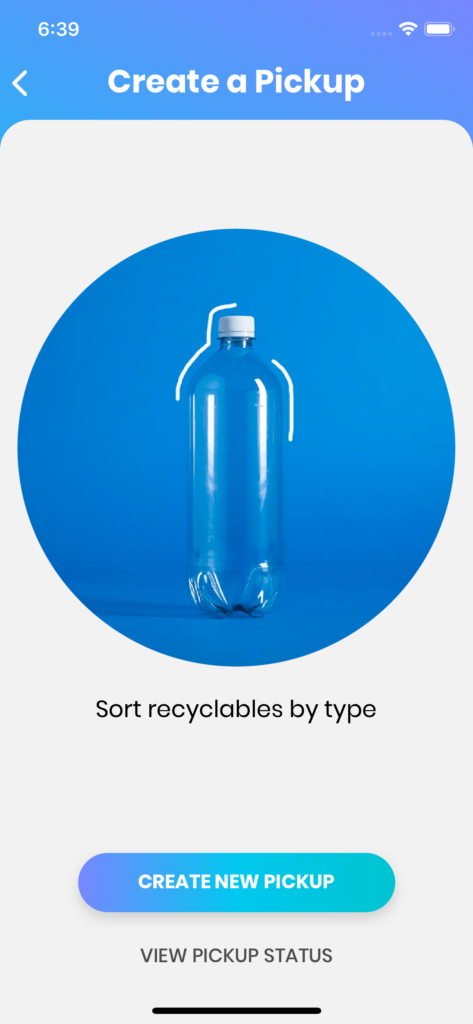
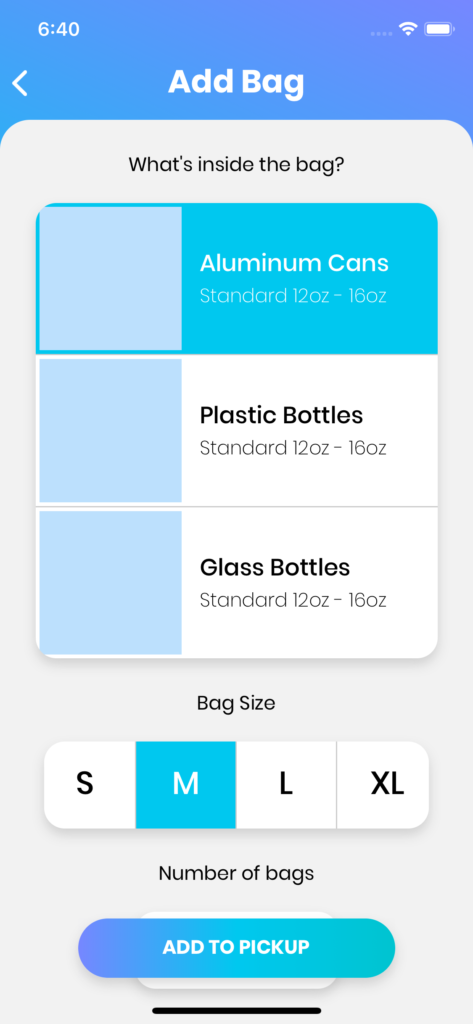
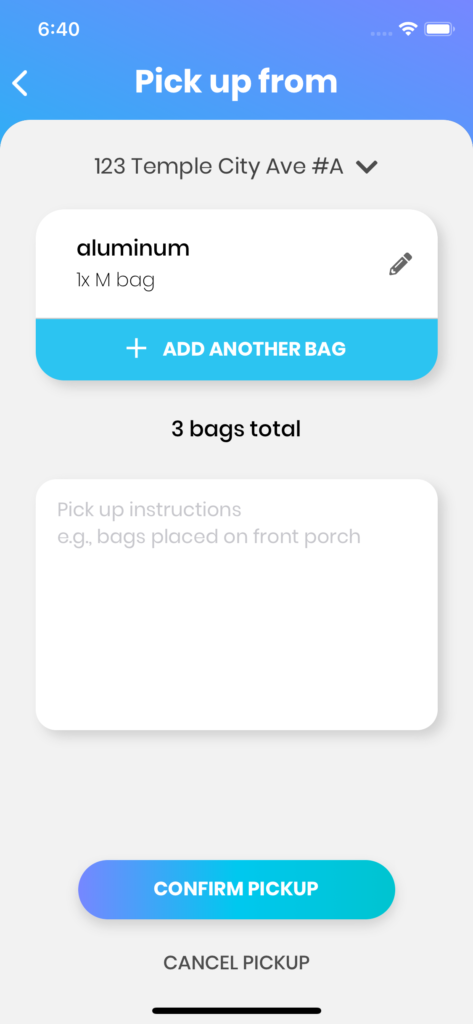
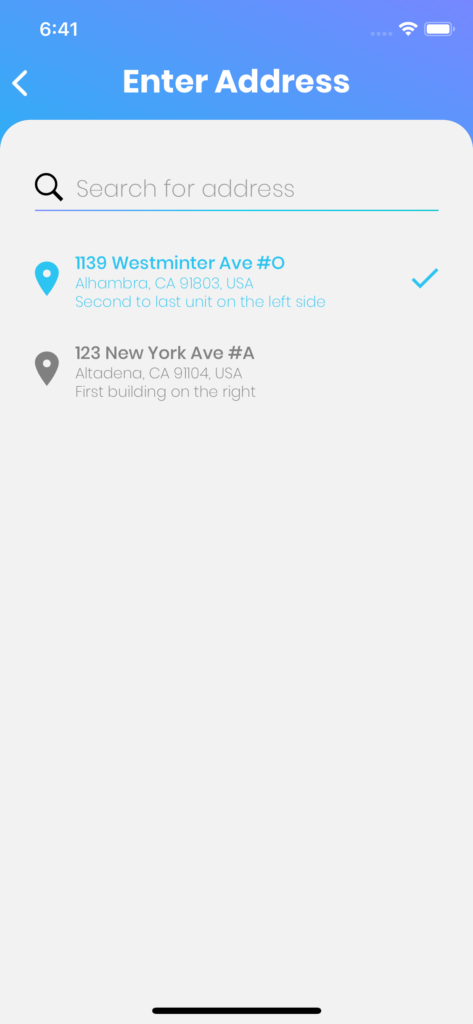
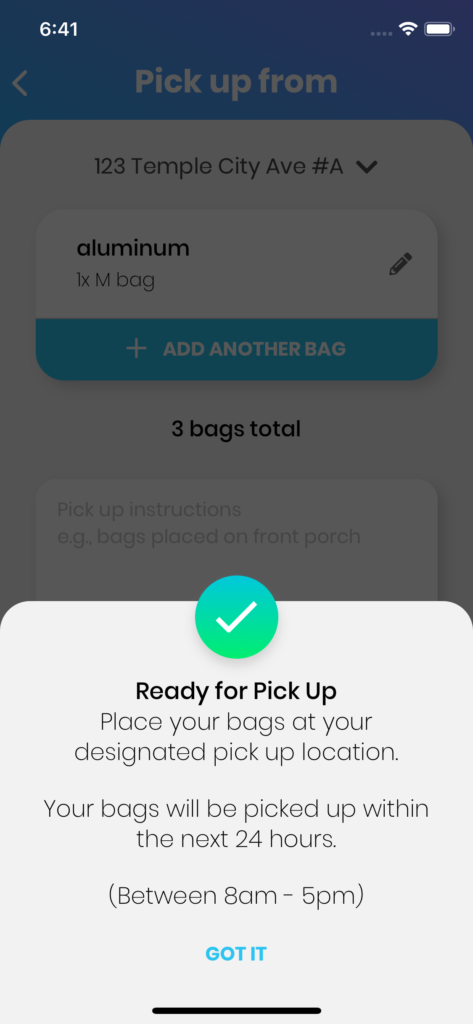
We built this flow to resemble something our users might already be familiar with, ordering delivery. Similarly to comparable apps like DoorDash or Uber Eats, we have a menu and checkout process.
Tracking was also being developed to help our users stay up-to-date about the process of their recyclables. After our drivers picked up the recyclables, it would be inputted into our system so that we could provide the users some visibility to stay informed about where it’s going.
Being Agile, Being Iterative
In an agile environment, we were able to learn and iterate quickly as we continued to develop our ideas. With our working prototype, we were able to conduct several rounds of moderated and unmoderated testing and take the feedback and further iterate on our initial designs.
Moderated testing allowed us to discover more about the experiences our users had with our app as well as their own previous experiences recycling. We learned about
Future Features and Further Considerations
From our moderated testing and further research, we came up with some other ways our users could use our platform.
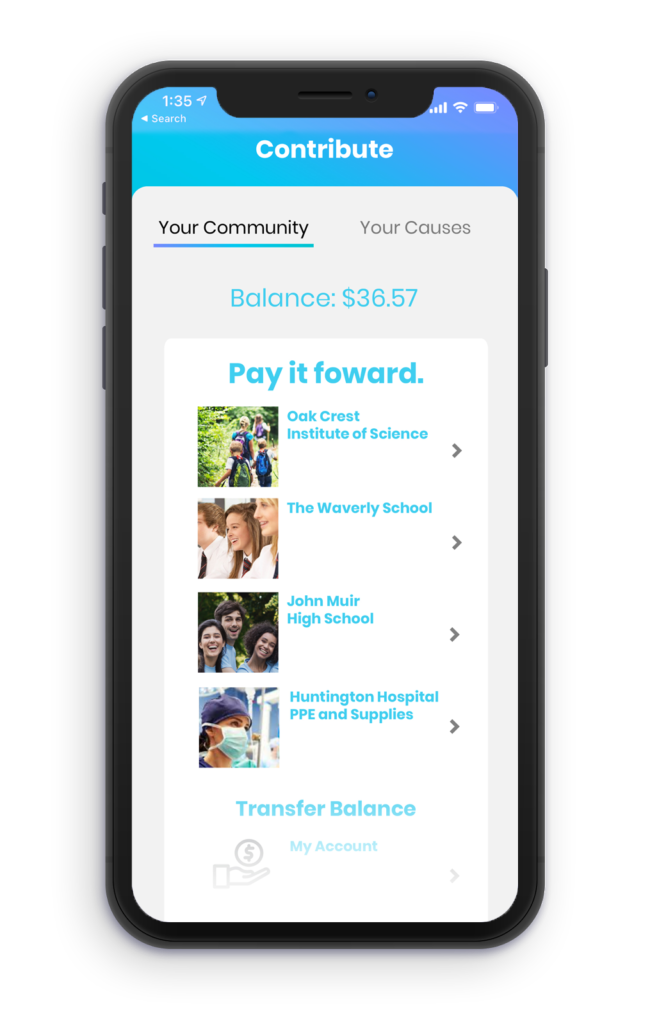
Pay it forward
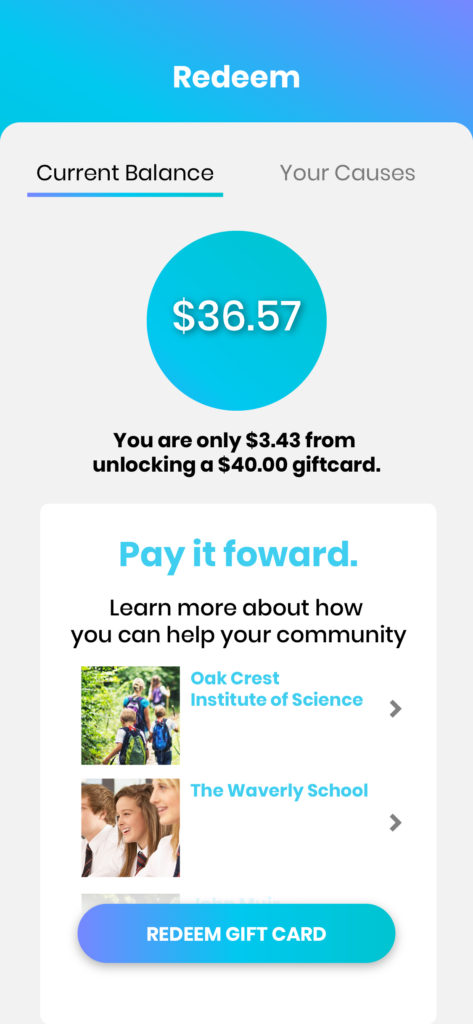
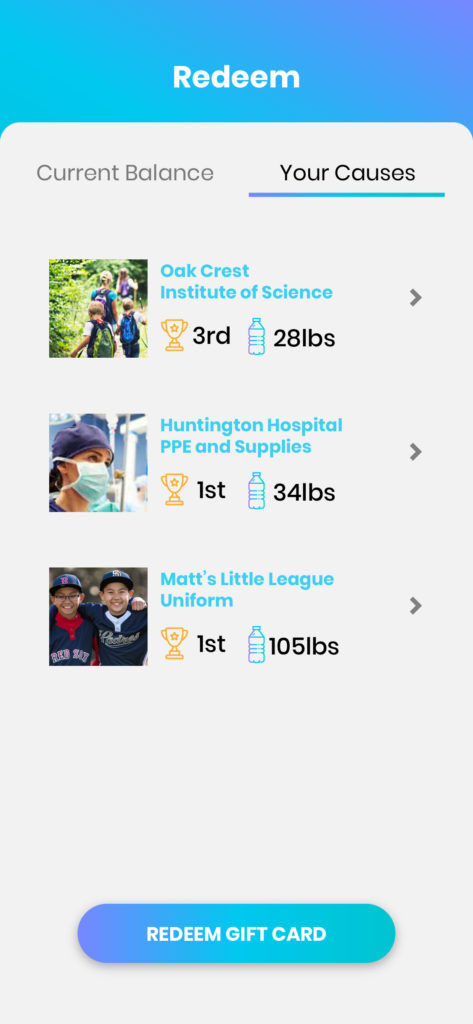
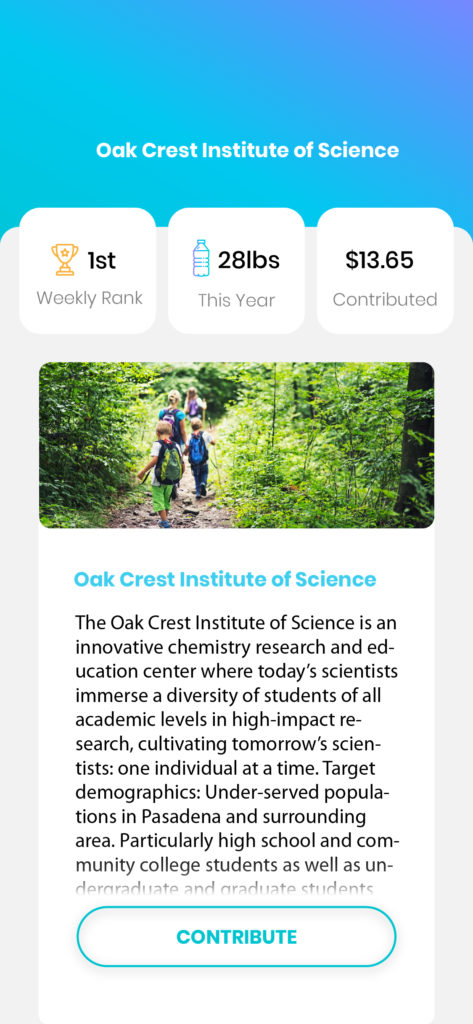
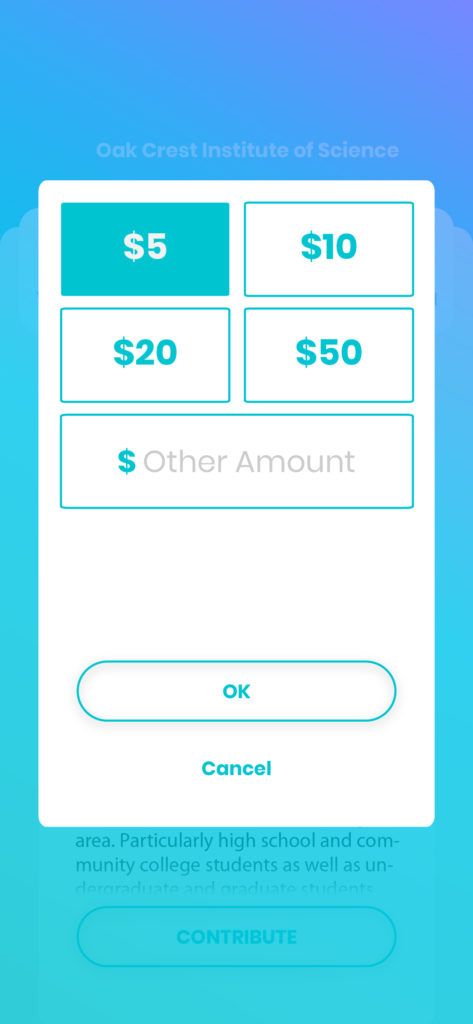
We considered how we could partner with local charities and school programs to so our users could use our platform help our their immediate community as well, not just planet.
Instead of claiming their refunds for themselves, they could automate the proceeds toward another cause.
More accessible instructions
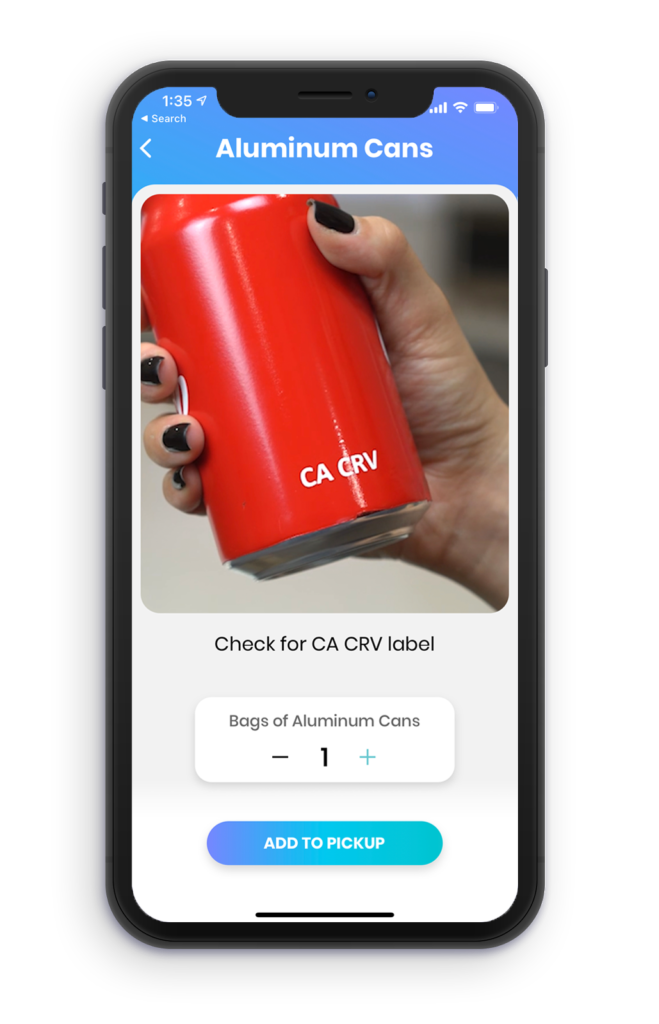
To make sure our users were able to feel confident and properly recycle, we shot some concept videos to demonstrate the appropriate steps to recycle. In addition to the video, we considered implementing voice over audio as well as captioning.
This was in efforts to assure high quality recyclables being put through our system and assure our users that they are recycling accordingly.
Extended services
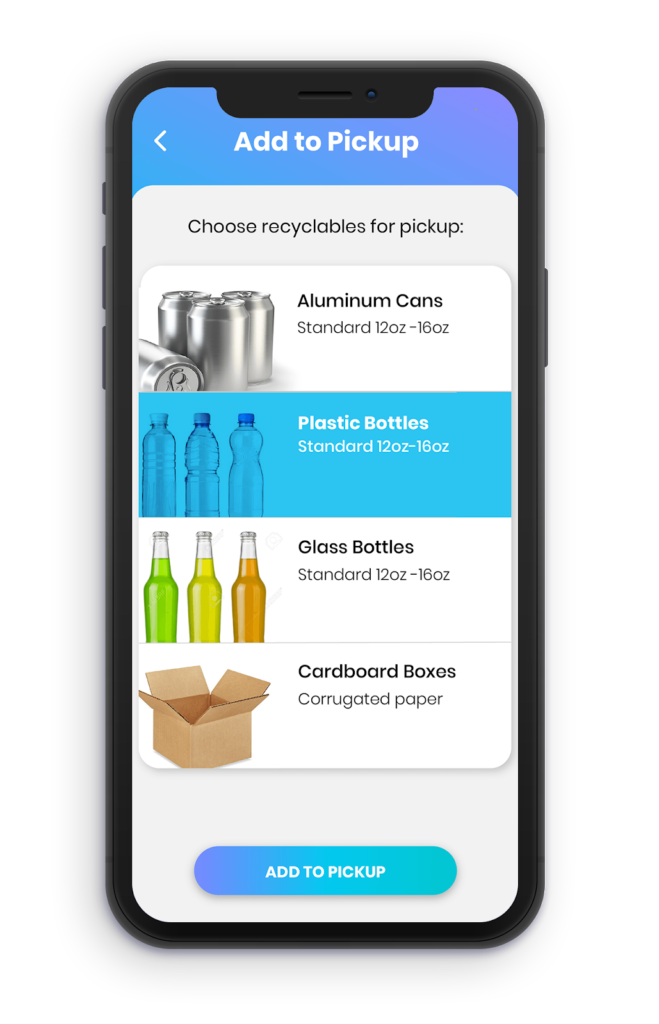
As part of our efforts to serve our users, we considered extending our services to pick up cardboard as well.
Because of eCommerce, the most popular materials residences recycled was actually cardboard. We didn’t want to let this go un-addressed, so we developed ideas to accommodate this need.
Outcome
CarbonLoop launched a localized MVP in the San Gabriel Valley and validated three core assumptions through real user engagement:
- Demand is real: Users were frustrated by existing options and actively sought alternatives
- The scheduling model works: Familiar logistics UX significantly reduced setup friction
- Transparency drives engagement: Users responded positively to impact tracking — it addressed the trust gap directly
The project produced a validated product concept with a defined go-to-market path: community partnerships (schools, local organizations), brand partnerships with eco-conscious companies, and a municipality licensing model for cities looking to improve recycling quality outcomes.
Future features validated through testing:
Cardboard pickup (emerged from data — eCommerce cardboard was the most common recyclable in most homes, but wasn’t addressed by any competitor)
Charity/school donation routing (redirect CRV value to local causes)
Gamification and community challenges
Instructional video content with voiceover and captioning
Reflection
This project taught me that the most important product decision we made wasn’t a design decision — it was a research decision. When early findings pointed away from our initial target user, we followed the data instead of defending our assumptions. The pivot from “eco-conscious early adopter” to “anyone the system has failed” changed who the product was for, what features actually mattered, and what success looked like.
The other lesson: intent without infrastructure is just guilt. Users weren’t failing to recycle because they didn’t care. They were failing because the system gave them no reliable way to succeed. Designing the infrastructure — clear guidance, predictable logistics, visible outcomes — was the product work.