A 7-minute stop-motion activation for kids and families
About the Project
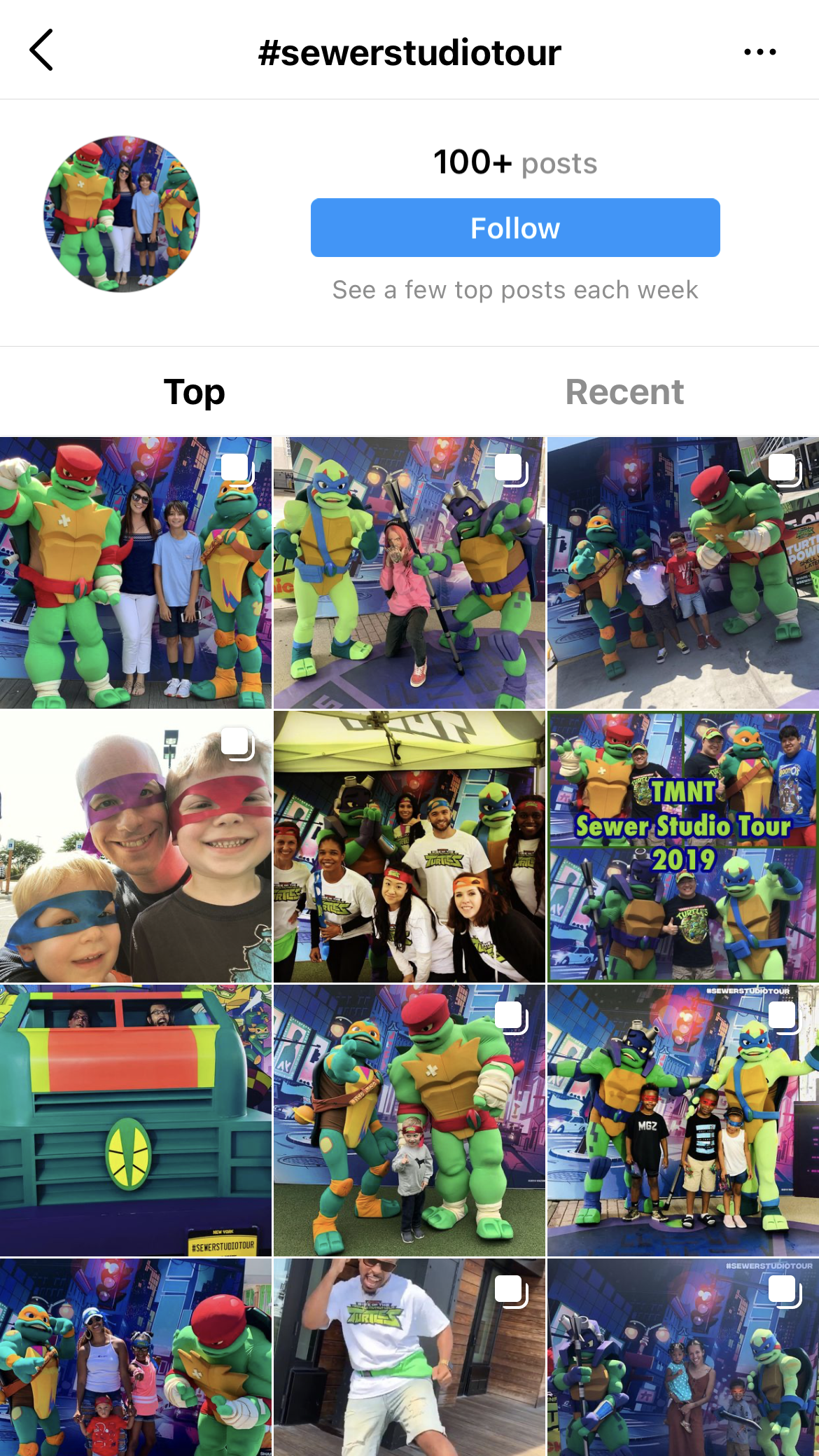
Nickelodeon gave kids and families the ultimate Teenage Mutant Ninja Turtle experience with it’s ‘Sewer Studio Tour.’ The tour visited 10 cities nationwide, and fans were able to meet their favorite Turtles from Rise of the Teenage Mutant Turtles.
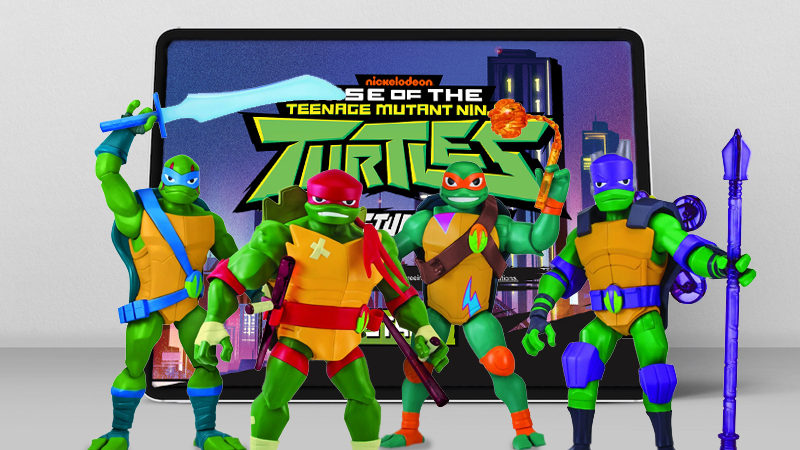
The ‘Sewer Studio Tour’ allowed kids to create their own dynamic stop-motion videos with Rise of the Teenage Mutant Ninja Turtles action figures. The best videos had the opportunity to be featured on other Nickelodeon platforms.
10
Cities Visited
1K+
Unique Activations
100+
Hours of User-Created Content
My Role
I led user research, experience flow design, rapid prototyping, and on-site testing for this activation. I worked directly with Nickelodeon’s creative team, production partners, and engineers to align on constraints, simplify the experience, and ensure the booth could handle real-world traffic and attention spans.
Challenge: Get attendees to interact, create, and share content, and teach kids stop-motion quickly in a simple, intuitive way.
Research: Ran parent–child testing and interviews; reviewed existing stop-motion tools to understand common patterns and pitfalls.
Prototyping: Built rapid iterations in After Effects, Illustrator, Photoshop, and XD.
Methods: Empathy mapping and journey mapping to shape the experience flow.
Timeline: 2 weeks
The Problem
Nickelodeon wanted an in-store activation where kids could create a fun, shareable stop-motion clip using the new TMNT toy line. The challenge was to build an experience that:
- Worked for kids with short attention spans
- Was intuitive enough for parents to facilitate
- Fit inside a physical booth with tight spatial limits
- Finished within a strict 7-minute throughput window
- Stayed true to the TMNT brand and promoted the new toys
This was essentially a systems problem disguised as a play experience.
Constraints & Tradeoffs
These were the non-negotiables shaping every decision:
- Time: The full loop needed to complete in ~7 minutes without feeling rushed.
- Cognitive Load: Instructions had to be almost self-explanatory — many kids couldn’t read the steps.
- Physical Setup: The booth height, lighting, and toy sets were fixed and couldn’t be redesigned.
- Varied Skill Levels: Some kids wanted to direct; others just wanted to press buttons.
- Brand: Creative freedom was welcome, but it still had to feel like TMNT, not a generic playground.
Each constraint forced us to streamline the flow and cut anything that didn’t directly support play or throughput.
What We Needed to Understand
Before committing to a direction, we answered a few key questions:
- Would kids understand stop-motion well enough to participate?
- Would parents step in or hang back?
- Could families complete the recording in time without feeling lost?
- Would kids actually use the TMNT figures — or ignore them?
- How much hand-holding would the intro need?
This shaped our early testing plan.
Research & Early Testing
We ran quick sessions with families in informal settings — toy stores, mall corridors, anywhere we could put prototypes in front of real kids.
We learned that:
- Kids grasp the concept faster when demoed visually rather than explained verbally.
- Most families treated it like a fast “make something cool and move on” experience.
- Reading instructions slowed everything down — pictures won.
- Parents naturally took on the “camera operator,” freeing kids to focus on play.
Decision: Move toward a picture-first script and a guided recording flow where the system cued each step automatically.
Experience Flow & Wireframes
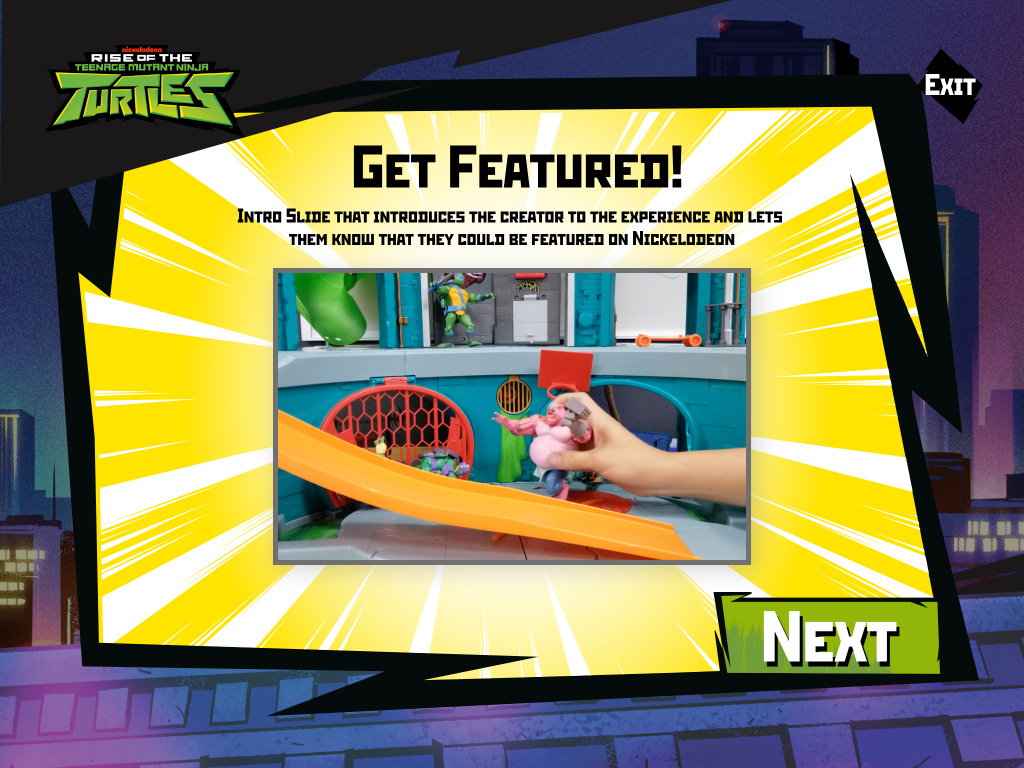
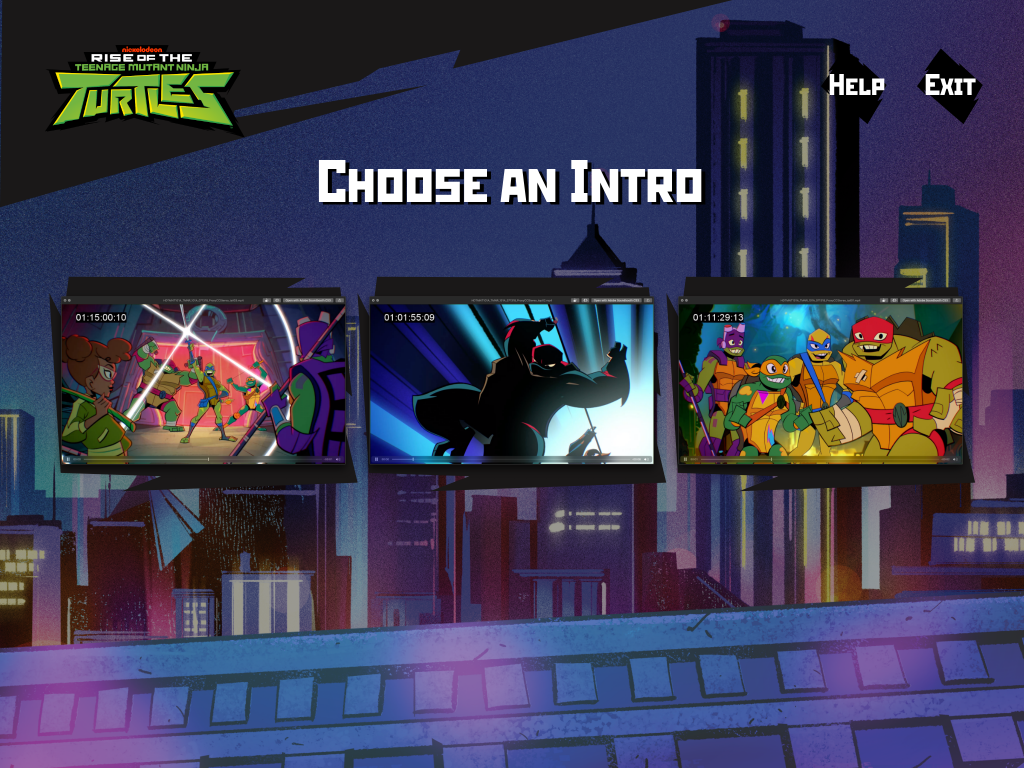
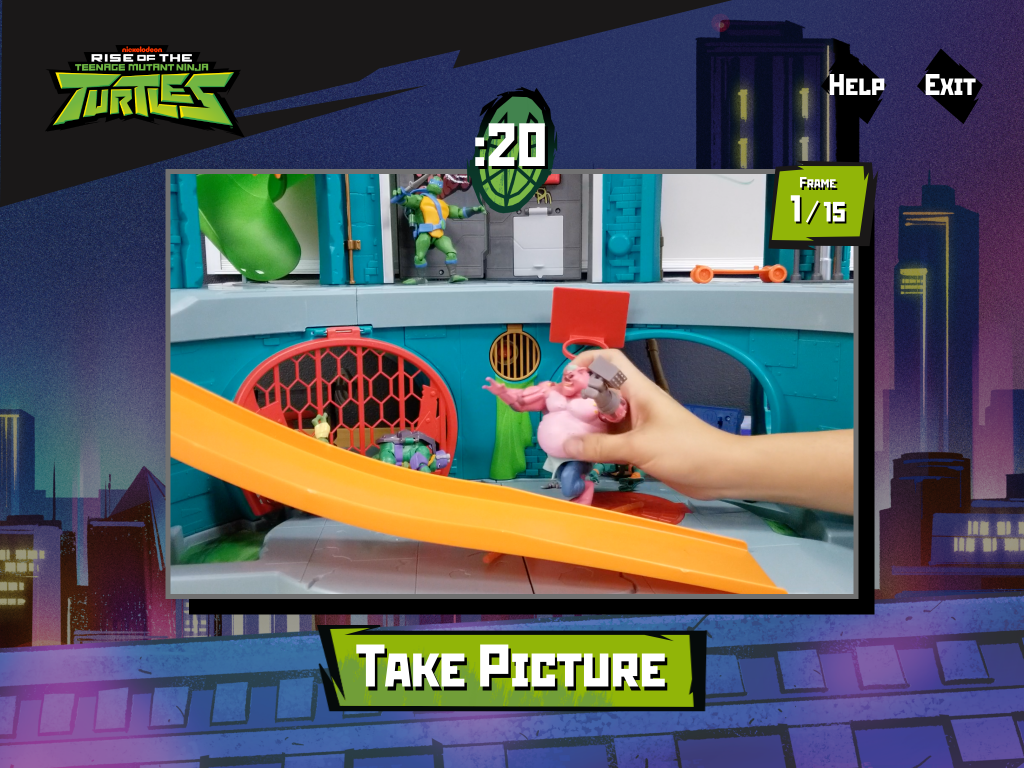
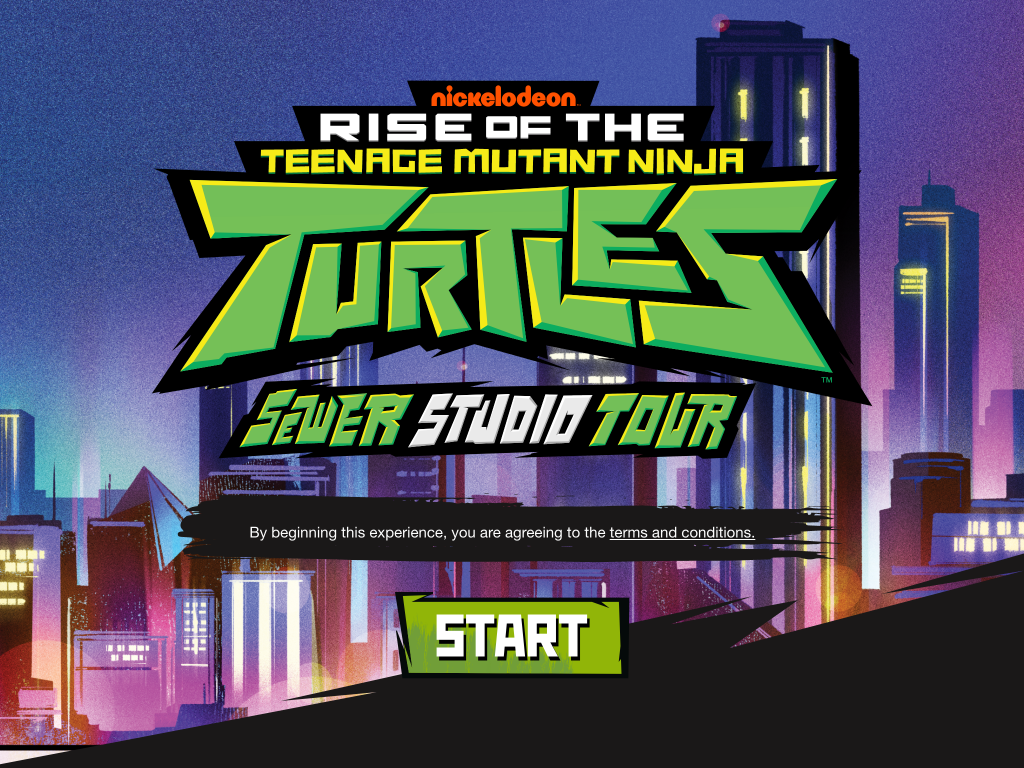
We built out a simple, time-bounded sequence:
- Quick branded intro — gets them hyped, no fluff.
- Pick your turtle — easy win, creates ownership.
- Set up your scene with the toy sets.
- Guided stop-motion capture — the system handled timing and cues.
- Preview + shareable output
Every step had to reduce hesitation. If a kid froze, the experience stalled — meaning the whole booth stalled.
We trimmed anything that added cognitive load, including a more complex storyboarding step that didn’t survive real-world testing.
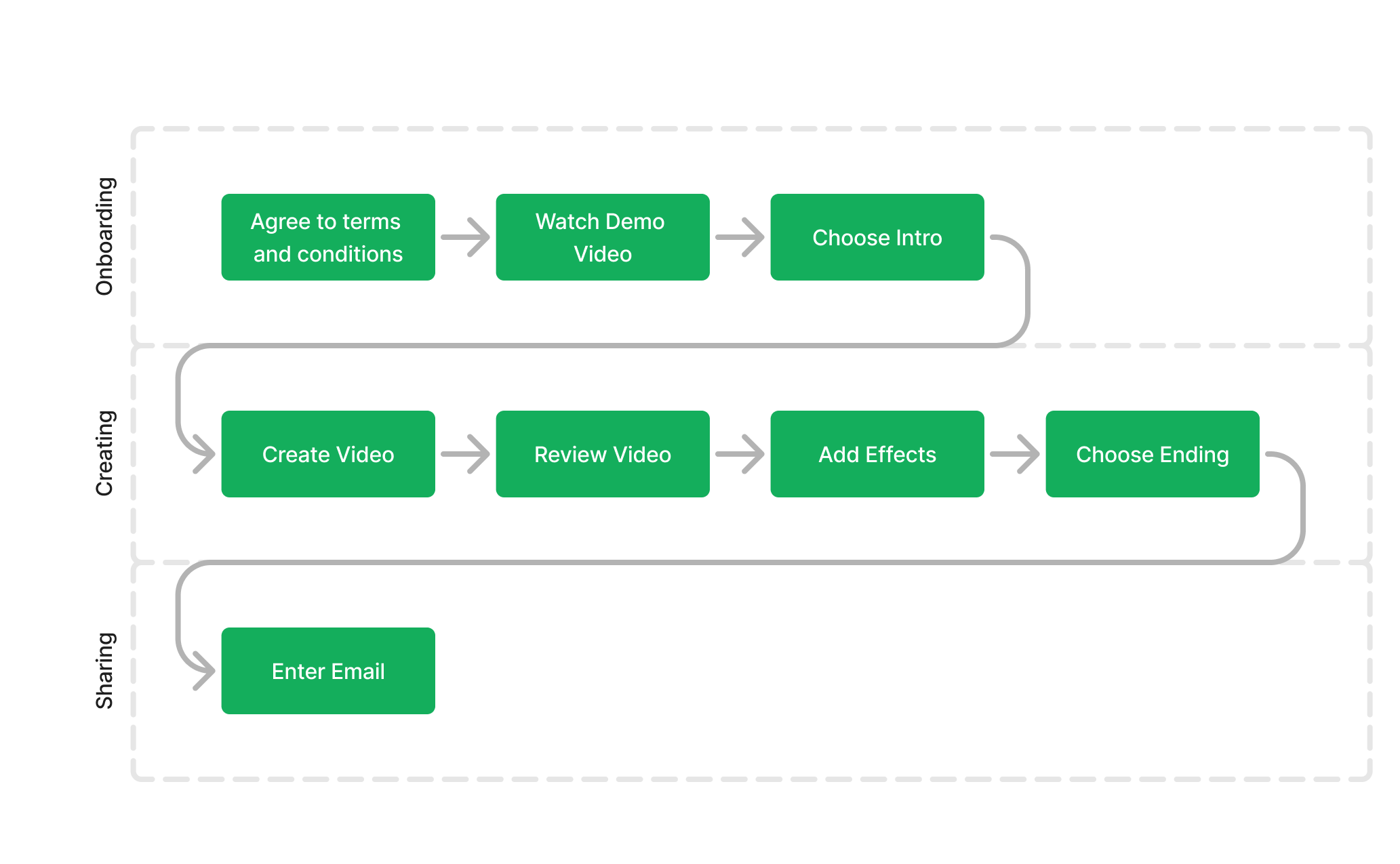
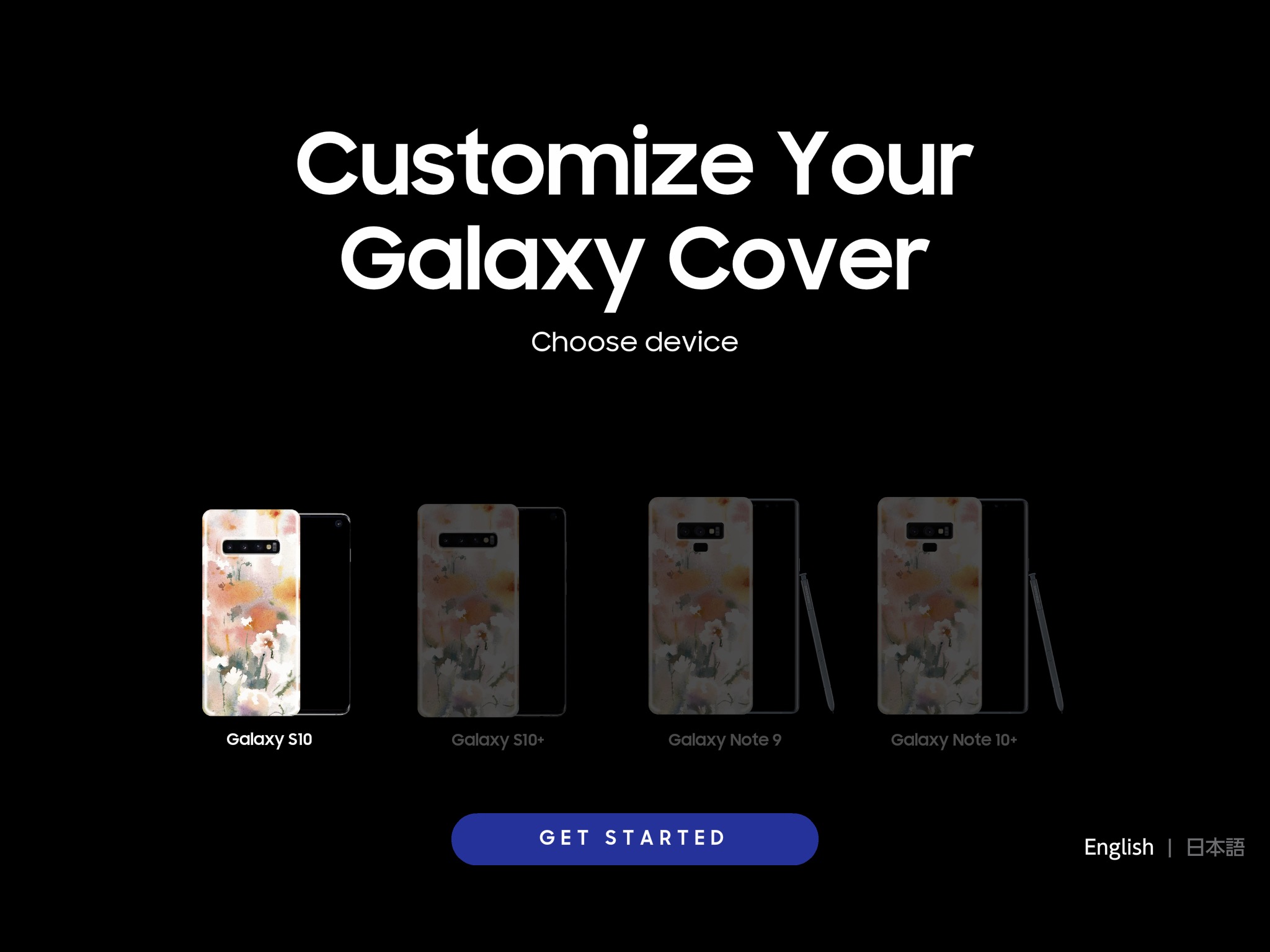
Here’s one of the initial wireframes we mocked up for our client to walk them through the experience.
Cross-Functional Collaboration
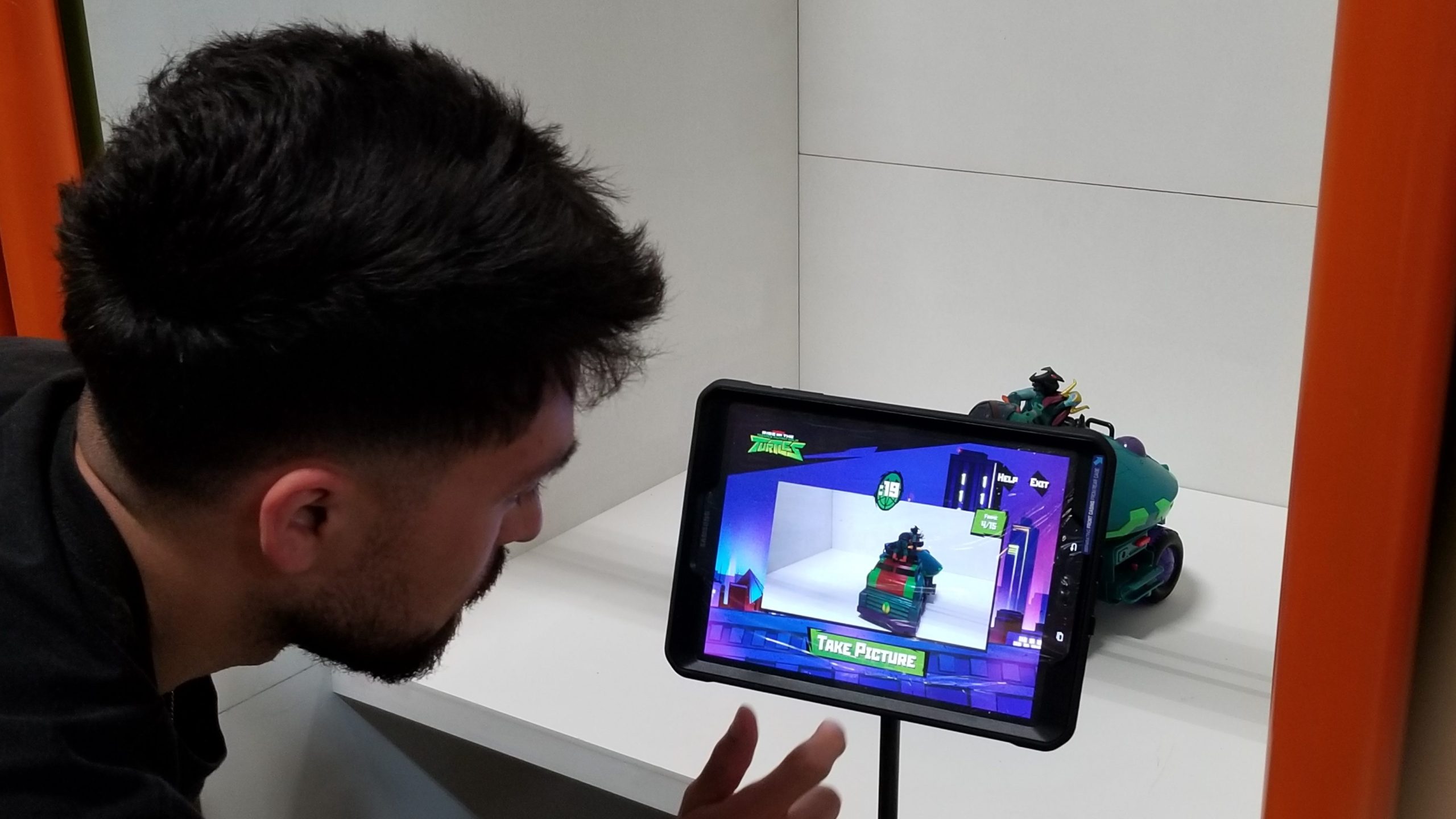
This project worked because communication stayed tight:
- Partnered with Nickelodeon’s brand team to align on tone and visuals.
- Worked with set designers and engineers to prototype the guided recording system.
- Co-led on-site run-throughs with production partners to vet booth height, lighting, and reset times.
- Brought testing insights back to creative teams to refine instructions and flow.
My job was often to translate chaotic kid-behavior testing into practical decisions the whole team could rally around.
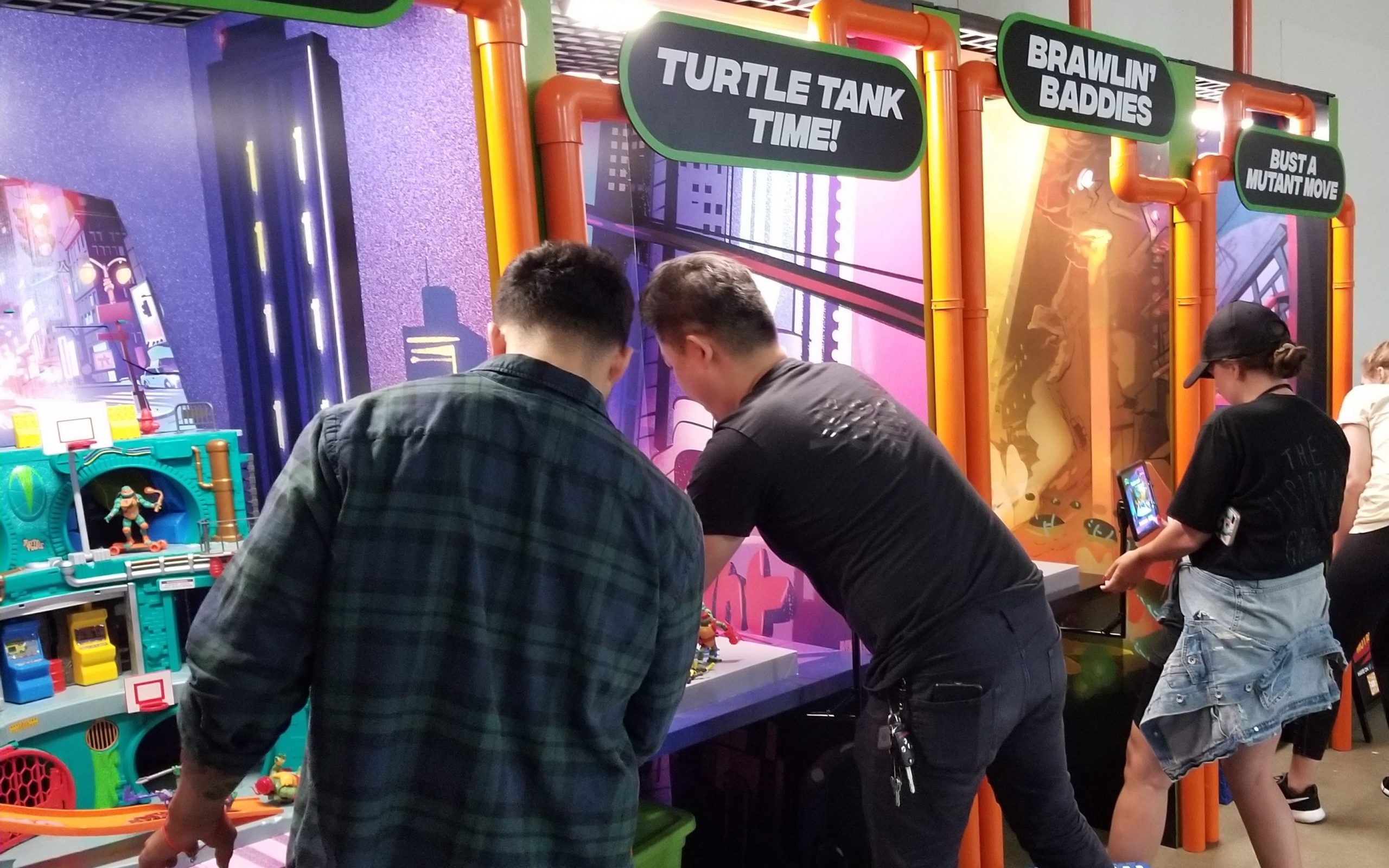
On-Site Setup & Adjustments
Once inside the store environment, new issues surfaced:
- Noise levels drowned out the scripted audio cues.
- Kids kept ignoring the start button location.
- Toy pieces shifted more than expected on the turntable.
- Reset time between families was longer than planned.
We addressed these with fast changes:
- Increased visual cues and reduced reliance on audio.
- Simplified the start interaction to a single, central button.
- Added subtle physical markers to keep figures in place.
- Adjusted the booth flow so staff could prep the next family sooner.
This part of the work turned out to be just as important as the earlier design decisions.
Impact
Even without access to exact metrics, here’s what we validated:
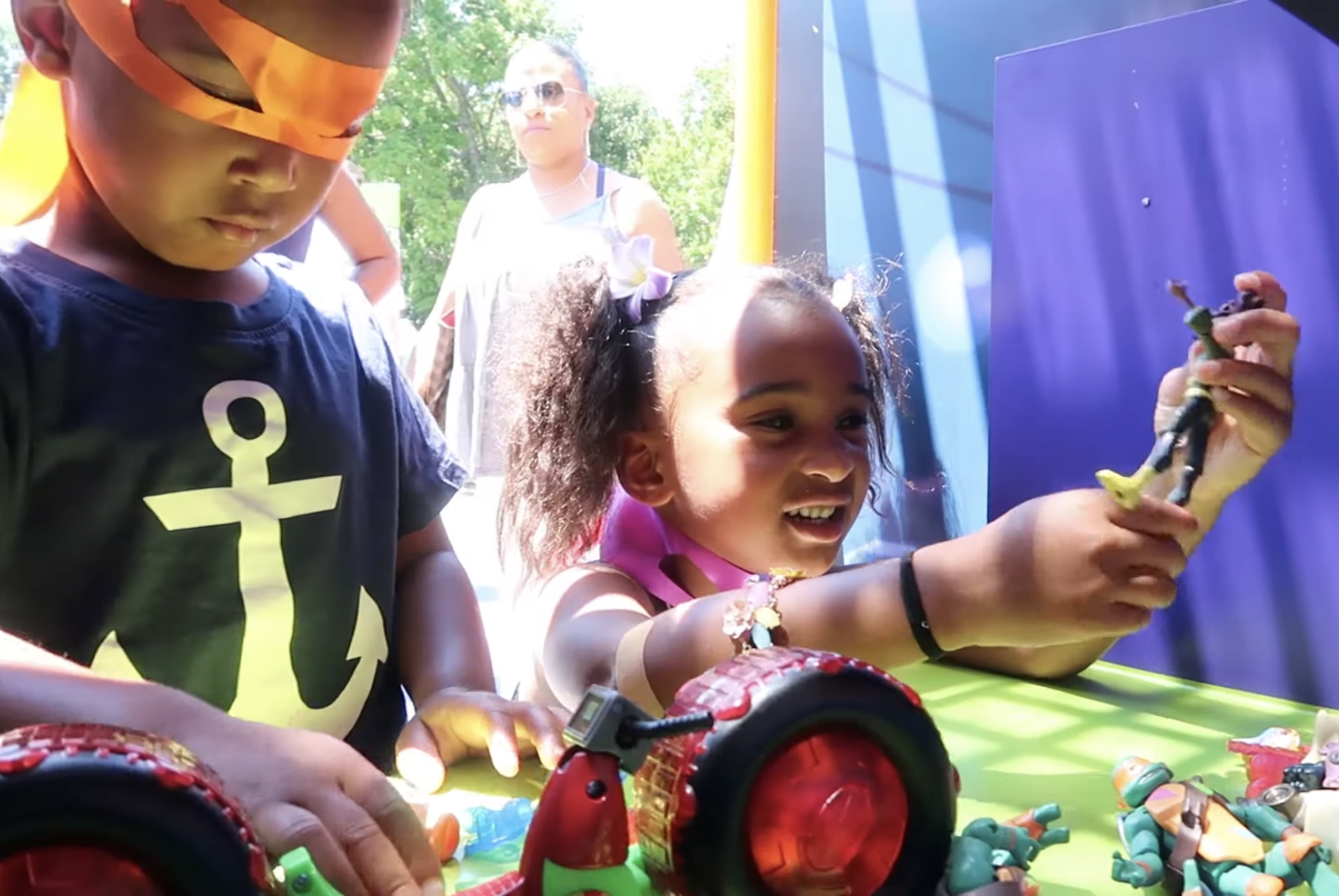
- Families consistently finished within the 7-minute target.
- Kids understood the flow with minimal verbal explanation.
- Most recordings used the TMNT figures as intended.
- Parents reported the experience feeling “easy to jump into.”
The activation met the goal: a fun, intuitive, brand-aligned experience that kept the line moving.
What I’d Improve Next Time
If revisiting this now, I’d focus on:
- A/B testing intro length to shave extra seconds off onboarding.
- A simplified “practice shot” step to reduce hesitation early.
- Better visual affordances so kids instantly understand where to place figures.
- More defined reset stations to reduce staff load.
- Optional story prompts for kids who want more narrative freedom.
These are all things we didn’t have the luxury to explore during the initial sprint, but they’d push the experience further.